Sunday, March 15, 2009

Now, THIS is a mail art catalogue

Once upon a time, paper ruled mail art. People wrote letters (imagine that), didn’t know what a computer was, and all the project documentation was in paper form, ranging from simple lists of participants to thick catalogues. Nowadays most people opt for posting all the works in a blog, mainly because it’s less labor intensive and definitely cheaper. Still, once in a whole I come across an old school doc, and the zine that Mujinga produced for his project Utopia is very well worth mentioning.


Inside you will find a brief description of the works he received, the usual list of contributors and, most importantly, a discussion on what mail art is and an interesting piece on how and why he embarked in this project, including the problems he encountered and the lessons he learned. All in all it’s a very useful primer for people who are thinking about doing the same thing, or are interested in the subject, and even includes a handy list of mail art-related web sites.
$2/Digest/20 pgs
Mujinga/Edward, 1 Delves Cottages, Church Hill, Ringmer, Lewes BN8 5JY, UK
spaceman@mujinga.net or http://wemakezines.ning.com/profile/mujinga

Madagascar!!! (the real thing)

If you are a paper fetishist like me, you’ll better get Well, Here We All Are!
Stories from Madagascar, Land of Golden Cows
before Sailor runs out of copies. You’ll get a heavy cardstock cover (mine was a nice brown that shines and twinkle under the light) and even the inside pages were copied on high quality paper. The whole combo is then kept together with a thick black rubber band that I find very appropriate, because I may be wrong but I imagine that this stuff would be easier to find in Madagascar than staples.


Then you open the zine and you are transported into this alien land where life is much different from so called civilized countries. Sailor spent one month on the island, visiting her friend who was working as a Peace Corps Volunteer. Alternating typewritten and handwritten texts with photos and quirky & cute drawings, she tells about life in Madagascar, its people, customs, food, language, etc. It’s the next best thing to actually boarding a plane and seeing it for yourself. Recommended.
$3.50 or selected trades (email first) /Digest/64 pgs
Sailor Holobaugh, 4 Valley View Ave, Takoma Park, MD 20912
sailor.holobaugh@gmail.com http://wemakezines.ning.com/profile/SailorHolobaugh
Loserdom


I must admit that my first impression of this zine wasn’t very positive. First of all, the cover was a confusing jumble. Even the many comics (they comprise about half the zine) looked rather crude. Also, I’ve never been too much into punk, and the prospect of reading endless interviews with unknown musicians wasn’t very appealing. Then I actually began to read the zine and I realized how wrong I was. Anto is a master interviewer, and his two long conversations with Irish peace and social activist Caoimhe Butterfly (11 pgs) and Deko Dachau (13 pgs) (“probably the most well known of Irish punk rockers”) are engaging and informative. I learned quite a lot about the evolution of the local music and zine scenes (the piece on Dachau even features many covers of historical Irish punk zines). What really won me out, though, were the comics. I’ve never quite seen something like this: They are a curious but ultimately beautiful mix of detailed landscapes and backgrounds and roughly drawn people who look more like caricatures. I can’t wait to get the next issue and see how Anto’s and brother Eugene’s surreal time travel ends. This monster issue is round up by zine reviews and an interesting Spanish revolution tour of Barcelona. Please gimme more!
$3 or 3 euros /Digest/112 pgs
loserdomzine@gmail.com http://wemakezines.ning.com/profile/Loserdomzine
www.loserdomzine.com
Bellarosa


This is a very nice booklet I got last year from Mariano Bellarosa, a new mail art friend from Italy I met through the mighty social network DodoDada (http://dododada.ning.com/). Mariano's forte are very detailed, somewhat weird drawings. This particualr booklet has very high production values and if you like the genre, you might want to contact him. You will find his profile in DodoDada.
AP!


If you are a mail artist, I don't need to explain who is Vittore Baroni. If you don't know him, I guess the easier thing to do is to google him and see for yourself all the things he has done since joining the mail art network in 1977. His zine Arte Postale! has been for 30 years a focal point for all the network's activities.


Unfortunately Vittore has decided to pull the plug on this project: AP! 100, that should be published later this year, will be its last issue.
The cover you see above is AP! 96, a magnificent catalogue Vittore produced last year to document an exhibition devoted to artists' books.
I believe that Vittore still has some back issues left, plus copies of some of his other publications (books, etc.). For a list, you can contact him at:
vittorebaroni (at) alice (dot) it
Xerox


The book you see below was published last year by German copy-artist Klaus Urbons to document his exhibition/project on xerography.


2008 was the 70th anniversary of the invention of the photocopier, a machine which has played a pivotal role in dramatically expanding what (mail) artists and zine makers can do, and both Klaus and I decided to make a tribute to its inventor, Chester F. Carlson.
My contribution was yet another two-issue set of KAIRAN (#14 +15) that features works by some 90 copy-artists and several articles on the subjects.
A few copies are still available. If interested, please send US$6.00 for the set (or US$4.00 for one issue) to my address.
Greetings from Kanazawa

I always say I love to live in Japan. Actually I should say I love Tokyo. I like big city life, to be precise. This doesn’t mean, of course, that I can’t appreciate the beauty of small cities. One of the places I haven’t visited yet but I’m definitely planning to is Kanazawa, a city on the west coast that is famous for Kenrokuen, considered by the Japanese one of the three best gardens in the whole archipelago. For the time being, I can now travel vicariously to this town thanks to mail artist and master photographer Mark Hammond who has just self-published Kanazawa in Black and White, a delightful collection of his b/w pictures that capture his adopted hometown in all his subdued charm.


Evenly divided according to the four seasons, these beautifully printed photos show you a side of Japan that people living abroad rarely get to see. This is a must for both photography buffs and people who are interested in all things Japanese.
$15 postpaid/Digest/40 pgs.
Mark Hammond, Teramachi 2-11-34, Kanazawa-shi, 921-8033 Ishikawa-ken, Japan
mark@po3.nsknet.or.jp http://www3.nsknet.or.jp/~mark/


KAIRAN 10 + 11


The visual poem you see below was made by Japanese artist Hiroshi Tanabu who is among the contributors to KAIRAN 10 +11.


This two-issue set is entirely devoted to poetry in the mail art network. It's almost 90 pages full of poetry (word-based, visual, concrete, etc.) and poetry-related articles and interviews.

KAIRAN 10 features:
- a massive ABC by Guido Vermeulen, who introduces many artists who are seldom included in mail art publications.
- a photo-report by Bruno Chiarlone on his postal actions
- an article by Theo Breuer on visual poetry
- a report by Nancy Burr about the NorthWest Concrete/Visual Poetry Exhibition in Seattle
- a piece by Carla Bertola on sound poetry by Italian female artists
- plus poems by Giovanni Malito, Turk LeClair, Monica Ferretti, Marilyn Dammann, Francesco Mandrino, Bernd Reichert, etc.

KAIRAN 11 features:
- interviews with Harry Burrus, Mark Sonnenfeld, David Stone and Francesco Mandrino
- an article by Misako Yarita on concrete and visual poetry in Japan
- a piece by Keiichi Nakamura on collaboration in poetry and art
- opinions by Geof Huth, Michael Peters, and Michael Basinski on visual poetry
- plus tons of poems by Reed Altemus, Ficus Strangulensis, Jim Leftwitch, Jesse Glass, Jr, Willi Melnikhov, Laura Ryder, Pete Spence, etc.

A few copies are still available. If interested, please send US$ 6.00 or 5 euro for the nice pair (US$ 4.00 or 3 euro for a single issue) (well-concealed cash) or a good trade (you know what I mean) to:

Gianni Simone
3-3-23 Nagatsuta
Midori-ku
Yokohama-shi
226-0027 Kanagawa-ken
Japan

And remember that all the back issues are still available: in particular,
- #3 is partly devoted to the historical TRAX networking project
- #4 is devoted to mail art in former Yugoslavia
- #5 is a homage to Robin Crozier ("the most famous unknown artist in the world")
- #6 focuses on art & money
- #7 is devoted to mail art in Latin America
- #8 is about femail artists
- #9 contains a huge annotated index of mail art publications

Many of these issues also feature rubberstamp art, stickers, and artistamps.

Order today some of these great zines, so you don't have to go all the way to the MOMA in New York, the National Museum of Contemporary Art in Oslo or the Staatliches Museum in Schwerin, Germany to read them.
Fun in the UK


I have almost all the issues of this zine. This should be enough to tell you how much I like it. This is your typical punk zine, with lots of columns, zine and music reviews, and assorted articles, but as usual, the writing makes the difference, and the gang behind Beat Motel can write as well as anybody, beginning with boss Andrew Culture and his scatologically fantastic sense of humor. Or maybe I should say humour: I’m a sucker for British English – even though I’ve recently got so used to the American version that I often have to check my dictionary, or directly mail Andrew for directions.


[Beat Motel]


Issue #8 is an 80-page, 69,400-word monster featuring 18 columnists discussing the idea of ‘country’ and ‘nationalism,’, 67 zine reviews, 142 CD reviews, 10 live reviews, and a truckload of foul words. The new issue #9 is the "sex/procreation issue" so don't tell me I didn't warn you.
The indefatigable Mr. Culture is also at the helm of Corndog Distro. Check out his web site and you will find more British zine delight.
2 pounds or $3 or 3 euros postpaid/Digest/52-80 pgs
Andrew Culture, PO Box 773, Ipswich, Suffolk IP1 9FT, UK
http://wemakezines.ning.com/profile/AndrewCulture
http://beatmotel.co.uk/ http://corndog.co.uk
A Rad Lad


One of the best artists and illustrators I've had the pleasure to meet since I joined the zine network is a lad from UK named Steve Larder. His zine Rum Lad is a sort of perzine in which Steve talks about his life, his friends, and chronicles his trips around and outside UK. In Issue 4, for instance, Steve goes to Mulheim, Germany, to attend the local zine festival. His art is top notch and I especially love the way he draws urban landscapes and architecture. Rum-Muffel is a collaboration with Isy of Morgenmuffel fame (another great comic zine, by the way); a travelogue detailing their winter trip to a national park.

Steve Larder, Somerset House, Cherry Holt Lane, Sutterton, Boston, Lincs, PE20 2H4, UK. stevejipwit@hotmail.com
morgenmuffel@yahoo.co.uk
The Future of Mail Art


The international mail art network has always been divided between those who like to
chronicle and/or analyze what they do and those who only want to make art and correspond with their friends without having to explain how and why they do what they do. Since the beginning, I have belonged to the former group, even though I understand that too much talking sometimes takes the joy out of the mail art experience. I have recently realized, by the way, that the more I write about mail art, the less I seem to actually do it. In this respect, the last two years have been very slow production-wise. But I digress.
Those who like to talk and write about mail art are a rather small group, if compared to the total of practitioners (they are mostly men, by the way. It seems that women could not care less about these endless debates) but they argue constantly, through their articles and by joining newsgroups, mailing lists and message boards on the Internet. Since 1986 they have even organized, every six years, so-called Decentralized Networker Congresses all over Europe and North America, in order to actually meet and discuss things further. Last year the fourth round of such meetings took place, ranging from informal visits to friends and improvised dinners to big festivals with plenty of events and activities. The one organized by Peter Kuestermann and Angela Pahler (a.k.a. the Netmails) in Minden, Germany was particularly important and attracted many people. One of the topics that were discussed in that occasion was “the future of mail art,” or as some of the participants put it, “is mail art getting old?” or worse yet, “is mail art dying?” What seems to be true is that mail artists are getting old - especially the hardcore group that has embraced mail art as a life style. Several of the people who were in Minden wrote me that “you always see the same faces.” They complain that young people are not interested in this old-fashioned way to network and spend all their time in front of a computer screen or pushing frenetically the keys in their cell phones. Other people reply to these complaints that the mail artists themselves are to blame: We don’t do enough to attract outsiders and make them understand and enjoy the pleasures of mail arting.
One of the more vocal critics of this “ghetto mentality” is Belgian networker Luc Fierens. As he wrote in a recent e-mail, “yes, I feel some of the network has become a closed club of blah-blah news groups and private parties. Wake up and open the field!” Always one who backs his words with facts, Fierens and partner Annina Van Sebroeck started in 1999 a workshop for children aged 8 to 11. Working in collaboration with regional integration center Foyer, they gathered a number of elementary school students, especially belonging to socially disadvantaged groups and immigrant families. At the same time, the work done between October 1999 and February 2000 in weekly meetings was linked to the international mail art network, so that the drawings, paintings, collages, stamps, etc. made during those sessions were sent out and exchanged with artists and children abroad. Thanks to the help of another Belgian networker, Guido Vermeulen, they even managed to involve the American “Children’s Art Program” of kidscommons, a children’s museum in Columbus, Indiana. As Fierens says, “Mail art is communication art. The value of communicating prevails over the artistic value and stands above the classical knowledge of language. This is particularly important for children with language problems. Therefore the aim of this project was to offer real opportunities to communicate across all borders.” The experience was so satisfying that it was repeated four years in a row, every time with a different theme: “Living in the Mirror,” “Dance of Life,” Soul Food: Envelope Your World,” and “Play.” Instrumental to the success of the project were Fierens’s efforts to involve public institutions (something other mail artists are usually not very happy to do) such as the Queen Paola Foundation. The finished works were exhibited at the Central Post Office in Brussels, the Museum of Spontaneous Arts, Molenbeek, the gallery of the public library in Etterbeek, and the Ministry of the French Community, Brussels. Of course achieving open and permanent lines of communication between the children themselves remains difficult, especially across international borders, because the extended waiting period causes them to forget about it and dropout. Nevertheless, receiving mail from another part of the world is a great, unforgettable experience that has a positive influence on their creativity and the way they think about other cultures. Once the seeds of communication are planted, they continue to grow and flourish.
Fierens’s workshop has been followed by similar projects in Germany, France, the Netherlands, and Belgium (“Maanschim--Exploring the Dark and Clear Side of the Moon,” that was independently curated by the children themselves), in which I had the pleasure to participate (see above image), sometimes with my son Luca. In some cases, the children opted to use the alter-and-return system, by sending out art to people who had previously agreed to collaborate and getting their altered works back a few weeks later.
For more information, tips on how to organize a children’s project, etc. you can contact Luc Fierens: Galgenberg 18, 1982 Weerde BELGIUM.

Cultural Terrorism

This is the back of an envelope I received from David Dellafiora, the indefatigable British networker who for several years has been plotting from Australia.


I confess I felt a little proud when I saw the "security checked" stamp, and that they had actually opened the envelope to verify its contents: To me it was as if officialdom had once again acknowledged mail art's outsider position as art's weird relative who must be kept in check.
Yes I know this is only wishful thinking.
Well, whatever.
Happy New Year!

For some obscure reason, being timely doesn't seem to be among my qualities. Therefore you will forgive me if I show these two fine pieces of mail only now - more than two months after the start of the new year.
As the people who have followed this blog from the start already know, I don't usually show all the mail I get. There are already too many people who do this. I don't think this is the best or even the most interesting way to use a blog, and to tell you the truth, I find such sites a little boring (even though I can see their "educational" value). But I degress.
I'm showing this beautiful greeting card from Ivan Zemtsov because he post it on January 5th, and arrived in Japan a few days ago. Not bad.


Also, I want to take this opportunity to thank all the people who send me xmas greetings. Alas, I never do it. I know, I'm a heartless bastard. I don't like xmas and other such festivities, and I'm not interested in celebrating. But I do appreciate your cards, etc. especially when they are as good-looking and witty as the one Keith Bates sent me last year.


Among the others, I'd like to remember Carol Stetser and Dietmar Vollmer who every year come up this new original ways to brighten my mail box.
2,000 Staples

A few months ago I finally used the last few staples left in the box pictured below.


This makes 2,000 staples in nine years. It might not be a record, but in these last nine years my faithful long-arm stapler has helped me publishing 13 issues of KAIRAN - Mail Art Forum, three issues each of Call & Response and Orga{ni}sm plus several one-shot zines, mail art catalogues, etc.
I think I'm allowed to a little celebration, right?

Monday, January 12, 2009

Tourism (1)

Because of "family issues," I don't have the chance to travel freely around the world and show up unannounced at the door of unsuspecting mail art friends (do not worry Keith!). That's why I'm very happy every time someone has enough balls (and money) to come all the way to Japan. One lady I'm particularly fond of is Jennie Hinchcliff of Red Letter Day zine and PodPost fame (the latter one is the dynamic duo she has started with partner-in-crime Carolee Gilligam Wheeler). Jennie-chan has an unhealthy passion for all things Japanese, and I've already had a chance to meet her in Tokyo not once but twice. In the photo below we are with her beau in front of Au Temps Jadis, a wonderful creperie in Shibuya (please note the fake European facade).

Every time we meet, Jennie never fails to bring some wonderfully weird present. This is a cute package she gave me the first time we met ("hajimemashite" means "nice to meet you").

When I managed to unravel the cleverly assembled combo, I found a bunch of nice envelopes she had made the night before in her hotel room by using paper she had picked up around Tokyo. I told you the girl is crazy.


Once in a while, she drags Carolee to Japan, and instead of taking it easy and visiting some nice museum, the two magpies roam the streets of Tokyo in search of used tickets, flyers, photos, cute-looking paper and other useful junk they later feature in their zines. This one is called Kimagure na dowa no hon.

If you want to have a look inside, you can check their wonderful web site out at http://www.podpodpost.com/shop.html You'll find many more delights.

Beware the Beat Motel


I have almost all the issues of this zine. This should be enough to tell you how much I like it. This is your typical punk zine, with lots of columns, zine and music reviews, and assorted articles, but as usual, the writing makes the difference, and the gang behind Beat Motel can write as well as anybody, beginning with boss Andrew Culture and his scatologically fantastic sense of humor. Or maybe I should say humour: I’m a sucker for British English – even though I’ve recently got so used to the American version that I often have to check my dictionary, or directly mail Andrew for directions. The latest issue #8 is an 80-page, 69,400-word monster featuring 18 columnists discussing the idea of ‘country’ and ‘nationalism,’, 67 zine reviews, 142 CD reviews, 10 live reviews, and a truckload of foul words.
The indefatigable Mr. Culture is also at the helm of Corndog Distro. Check out his web site and you will find more British zine delight.
2 pounds or $3 or 3 euros postpaid/Digest/52-80 pgs
Andrew Culture, PO Box 773, Ipswich, Suffolk IP1 9FT, UK
http://wemakezines.ning.com/profile/AndrewCulture
http://beatmotel.co.uk/ http://corndog.co.uk

Tuesday, December 30, 2008

Showing Off


Mail art is based, among other things, on so-called 'gift culture.' In other words, most mail artists refuse the commercial side of art and prefer instead to send each other their own creations as gifts - which, admittedly, is not a difficult thing to do as our exchanges are based on friendship, not money or interest.


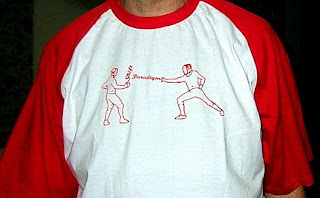
Speaking of friends, the t-shirt in the photo was sent to me by my dear amigo Joan Puig aka John Mountain from Barcelona. JOMO is a relatively recent addition to the mail art network, but he is very well regarded for the quality of his correspondence and his intellectual and artistic works. Actually he is not widely known, for the simple reason that he prefers to cultivate a small personal network of close friends whom he likes to spoil with unique gifts. Like this very limited production t-shirt that features his latest obsession: finding a new paradigm shift to save the world of (mail) art from its current condition. I don't really know how to contribute to his mad quest, but at the very least I can show off his precious gift.

Friday, August 29, 2008

Love Is a Hot Gun


As zine makers never tire to state, making a zine is in itself an awesome thing, and every person who takes the time to write, put together and share his or her creation with other people deserves to be praised. This said, it’s also true that too many zines are not all that interesting. Between poorly chosen subjects, navel-gazing perziners, and just plain bad writers, I sometimes wonder why I waste my time reading so-so stuff instead of a good book. Luckily once in a while I discover something truly different that manages to both entertain and inform. American Gun Culture Report goes even beyond that, as editor Ross Eliot tackles a controversial subject in an original, thought-provoking way. The subject, of course, is gun control; the role firearms play within society and culture; and how they relate to power, violence, and politics. More importantly, Ross wants to show that not all gun owners are your stereotypical supporters of the status quo or racist paranoiacs. As he writes in the premiere issue of AGCR, “there should be no contradiction between advocating for human rights as well as gun rights.” (To get the idea, you only have to check his web site out and have a look at the photo gallery, featuring a seemingly out of place bunch of gays, Goths, and other strangely clothed people at a shooting range in Portland).
I was born and raised in Italy, and Europe has been for years an anti-gun environment. My father was a police officer, and in my family we all knew where he kept his pistol, but the place was strictly off-limits and I never even dreamed of touching it. For the last 16 years, then, I have lived in Japan, a country where firearm ownership is severely restricted. They put you in prison even if you own a modified toy gun. Indeed, the general opinion here is that the strict national laws must be thanked for the very low rate of violent deaths. With such a background, you can imagine the attitude with which I approached this zine (let’s say “open but skeptical”). Also, I keep thinking that the USA is in many respects an extreme country with extreme social conditions, and what can be considered acceptable and even necessary for people living there – “we have a moral right and responsibility to defend ourselves and our families against harm” (Wild West style) – is a little out of place in our countries. But Ross really does a very fine job of balancing all the different points of views. Another thing I noticed is that in the span of three issues, he has somewhat expanded the scope of AGCR from a strictly-gun-talk zine to a place where social and political issues are thoroughly explored. And of course there is the writing: AGCR currently boasts some of the most interesting, articulate, wickedly funny writers in zinedom. And no, Ross didn’t have to point a gun to my head to make me write such a good review. Order AGCR and find for yourself.

American Gun Culture Report
Issues #1-3, $3.00, $10.00 for a 4-issue subscription, 52 pages www.myspace.com/agcr308
editor@americangunculturereport.com http://www.americangunculturereport.com/

Friday, August 22, 2008

Back to the Roots

I’m a hardcore townie and could never live in the countryside, let alone engage in such activities as gardening or growing my own vegetables. This of course does not mean that I don’t enjoy reading about people who lead that kind of life and more generally embrace a more sustainable lifestyle. I actually envy them because I’m conscious that they are fundamentally right and it is people like me who are ruining our dead old planet.


Enter Dan Murphy and Trace Ramsey, two nice guys who like to get their hands dirty and rant about their life choices. Dan describes himself as a “gentleman farmer” (“but just because it sounds cool,” he adds) and his zine The Juniper as 1) the journal of a budding horticulturist; 2) a flippant response to the Man’s agenda; and 3) a heartfelt attempt at knocking some sense into society. The two issues I have (#9 and #10) are rather slim but they are very worth reading. In issue #9, for example, he writes about his experience working as the assistant farm manager of an organic farm near the University of Idaho. What I like the most, though, is Dan’s attitude, his down-to-earth approach and especially the lack of preaching. He is the first one to admit his faults and all the things he could do more or better, and in doing this he helped me feel more comfortable with my own contradictions.

Even Trace is actively engaged in supporting local and organic farms. He has been putting out his zine Quitter since 2005. After publishing five issues, he has decided to collect the whole lot into a 40-page hand-made book and he was kind enough to send me copy #35 (I know because each copy is numbered). The object itself is a little jewel, with a great color cover and color and b/w illustrations throughout. And then there’s the writing, of course. Put it simply, I believe that the best writing is the kind that 1) manages to be engaging regardless of the subject; 2) makes me think; and most of all 3) makes me feel like I want to take highlighter and pen and cover the pages with comments and orange marks. Quitter managed to do all these things.
Trace writes what he calls creative non fiction, and through the years has developed the ability to put common words together in original combinations. He manages to be sophisticated in a natural, unassuming way. At the same time, he anchors his rants with stories taken from his memories. Sometimes he will write something like “I was born with an extra pair of ribs” and the reader (or at least a dumb reader, such as myself) will search for hidden meanings until he realizes that is the plain truth. Apart from the autobiographical notes, the common theme that returns in all the five issues is Trace’s decision to “quit” the kind of world that humankind has turned into a huge pile of garbage. Quitting a job he hates and translates into “someone else’s hopes and mortgage and car payments;” quitting unconscious consumption; temporarily quitting the civilized world in order to live for three months in “solitary confinement” in a forest and study the breeding habits of a small songbird… What he will not quit is fighting to “preserve the history of (…) an idea that would often be considered irrelevant by the dominant culture,” and writing “for an audience that is resilient in its opposition of being taken for granted.” What can you ask more from a zine?

Back to Dan, he publishes another zine, Elephant Mess, that couldn’t be more different from The Juniper. I’ve got issue #19 that is supposed to be a kind of celebration (it is subtitled “Nice Things – The Ten Year Anniversary”) but the general mood is rather gloomy. As much as The Juniper is a call to go out and do stuff, this one is the occasion to explore darker places. It’s all about things that hurt, old wounds that never heal, and longing for solitude. As Dan himself admits, “I enjoy the reactions I receive when I routinely embody pessimism.” Luckily Dan doesn’t seem to take himself too seriously, and the overall effect is often amusing. Another major difference is the writing: The Juniper’s plain, direct style is replaced here by a more convoluted prose, which is not necessarily a bad thing. Even though Dan thinks he often sounds like an imbecile, I found this a rewarding reading experience. If you want to know 101 more things about Dan, you can have a look at his blog (listed below).

The Juniper and Elephant Mess
$2 each, Dan Murphy, P.O. Box 3154, Moskow, ID 83843, USA, juniperjournal@hotmail.com , http://juniperbug.blogspot.com/

Quitter
$15 plus shipping. Trace Ramsey, 160 A. W. Buckner Rd, Siler City, NC 27344, USA, localrevolt@hotmail.com , http://www.goodlucknotdying.com/

Thursday, July 03, 2008

My Zines Reviewed

Well yes, sometimes you review, sometimes you get reviewed. This is what other publications think about my zines. In case you are interested, all of them are still available - for less than you folks pay your government to destroy the environment, kill other people and organise silly useless summits.

Call & Response #1 reviewed by Erin (One Fine Mess)
One thing is for sure: Call & Response is 2004's best English-language zine written by an Italian living in Japan. That's faint praise, so I should add that this engaging debut would stand out whatever the niche. In this issue, Gianni tells of travels, his occupation (teaching Italian to Tokyo-area students), his flair of filching photocopies, and his history in the world of mail art. Don't let the complicated overseas mailing address scare you, my pretties. Call & Response is worth that trip to the post office. [5.5” x 8.5”, $3 or 3 IRCs postpaid worldwide, selective trades (contact first)] jb64jp@yahoo.co.jp

Call & Response #1 reviewed by Doreen King (New Hope International Review http://www.geraldengland.co.uk/revs/)
This booklet has a mail art feel, with the personal, chatty and rather intimatefeel that mail art brings. It is full of short articles and anecdotes of the type that would not be out of place on a low ebb chat show. The artwork is very good

Call & Response #1 reviewed by Sean Stewart (The Zine Rack)
This is a new personal zine from passionate mail artist Gianni Simone. Most of the stories have been previously published in other places, but they still convey a unified, and intriguing, portrait of Gianni. And, as would be expected from a mail artist, the layout and graphics in here are top-notch. The color of the cover stock is really cool, too, and one that I’ve never seen before. And the cover features a color-copied photo of the man himself in India, posing with a four-legged companion. Topics inside range from a diary of photocopy thievery to breakfast in India, and from mail art to insect encounters. Gianni’s writing is expressive and articulate, even in his non-native language of English, which makes his new zine a pleasure to read. I’ll be looking forward to future issues!


Call & Response#2 reviewed by Keith Rosson (Razorcake http://www.razorcake.org/)
This one’s put together by the same guy that does Org{an}ism, and it could almost be considered an accompanying issue of that zine. This one also explores the theme of home and belonging, albeit with a lot more contributors this time around. Simone deserves a high-five for assembling a truly diverse group of contributors here. Standouts are 1.) John Adams’s scary account of being processed into prison—the delousing, the shower, the head-shaving, all the stuff in his pockets placed in an envelope and filed away for his release. 2.) Onjana Yawnghwe’s charming typewritten/hand-drawn history of all the houses she’s lived in throughout her life. 3.) Vincent Voelz’s lengthy story about moving from Minnesota to SF. See, that’s the cool thing about this zine: some of these stories are almost heartbreaking in their depth and sincerity, and some of them just detail trying to find home, trying to belong and feel a part of, in such a kind of average way that it’s so easy to relate to. That’s what makes this thing such a good read—that ability to identify. [$4, 5½” x 8½”, photocopied, 60 pgs]

Call & Response #2 reviewed by Quismada (Xerography Debt http://www.leekinginc.com/xeroxdebt/index.htm http://xerographydebt.blogspot.com/)
This is a collection of some highly talented writers who share their experiences about home. Give credit to zine maestro Gianni Simone for putting together yet another classy publication. Some of these writings will make you cry, others will make you snicker, either way, few people will read the zine without being touched in some way. The writers come from all over the globe and this zine is an open window to their lives. Put that travel book aside and if you're thinking about moving? Consult this zine first.

Call & Response #2 reviewed by Geoff Huth (http://dbqp.blogspot.com/)
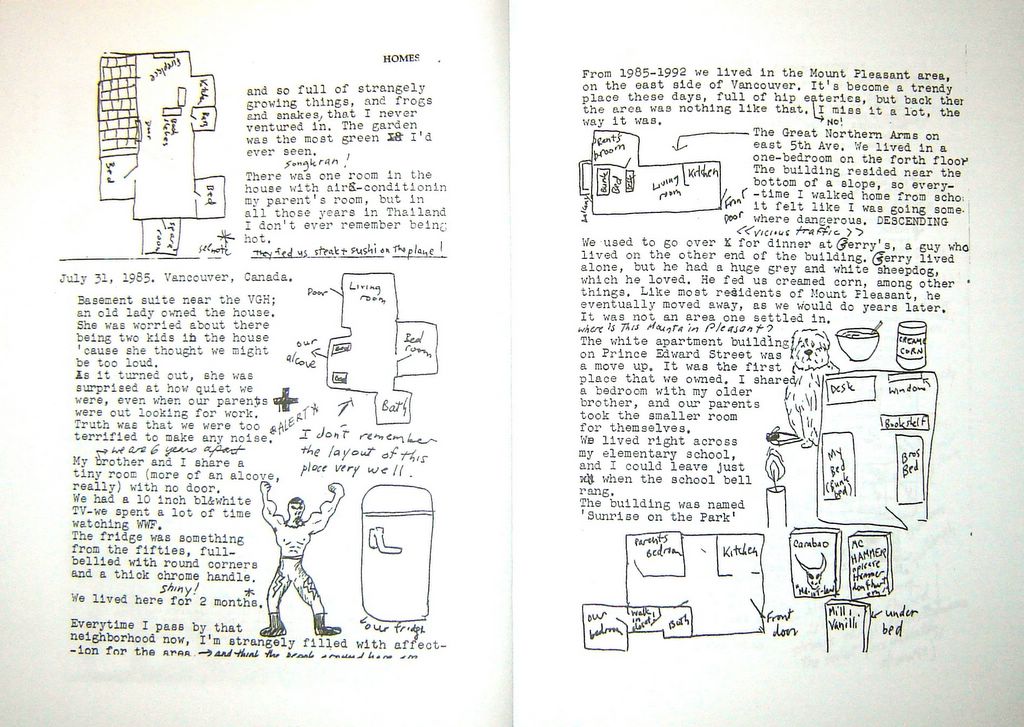
Yesterday, I received a copy of the second issue of Call & Response, another zine from Gianni Simone, an Italian who seems to create only English-language zines while living in Japan. As with anything I receive from Gianni, this zine is carefully crafted. In this case, part of that craft is explained by the subtitle of the issue: "at home -- not at home." Gianni asked a number of his correspondents to write about "traveling - living abroad - culture shock - cultural heritage - feeling an outsider in the place where you live - different concepts of 'home.' This zine of Gianni's gives us some insight into others' points of view about home and how those changed over their lives. The visual poet David Baptiste Chirot writes about the concept "Home is where I hang my hat," recounts a non-meeting in Paris with the hat of William Saroyan, and tells us about living overseas and in a transitional home in Milwaukee. A couple of his famous frottage poems (which he calls "rubBEings") bookend his essay. The mailartist Bernd Reichert, whose work is often vispoetic, includes a small multilingual collage as well as the story of an East German self-exiling himself to Belgium after the reunification of Germany. Randall Osborne tells a too-short story of a home broken up and of how both of his names slowly changed on him against his will. Carlos M. Luis, "the great gesture writer of visual poetry," writes about being a Cuban immigrant to America, whose views are anti-Castro yet not in line with the Cuban-American majority.Onjana Yawnghwe tells us about her life in Thailand and the corollary of that life in Vancouver. She tells us a fully verbo-visual story. She draws simple pictures of her homes (often they layouts), types her story around those pictures, and then emends the text by hand. This ends up giving her story a childlike quality that I enjoyed.
But I'm giving away too many of the stories. There are six or seven more. This zine is the first in a long time that brings back to me a whiff of the Factsheet Five era, when my friend Mike Gunderloy served as the central node of a huge network of zines, when my mailbox was always full of some sweet gift from Asia or Europe or North America. (Gianni, for instance, writes the bios of each of his correspondents in this issue, giving the boring author bio some life and relevance.) This zine reminds of the network that once was. But it is mostly about the stories.We hear four stories from visual poets alone in these pages, two stories from people whose fathers were diplomats, two stories that mention tamarinds, as well as stories from Asia, Europe, Africa, the Middle East, and both Americas. All of the people we hear from are artists of some kind, but of the type I call invisible artists (because I am one myself). Invisible artists don't make a big splash, don't really become famous, don't make any noticeable money off their art, and sometimes live the usual lives of usual people in unusual ways. There are some great stories in here, simply told, along with a few surprises about the lives of visual poets.
Call & Response is available for $4 or 3 IRCs worldwide. email.


Orga{ni}sm #1 reviewed by Davida Gypsy Breier (Xerography Debt #16)
I've been interested in Japan since becoming friends with a Japanese freelance writer a few years ago. I think about going to visit her in Tokyo one day. It is captivating to read about a place you want to visit, especially through the eyes of someone who lives there, yet who started as an outsider.In addition to Gianni's description of the city, food, and movies, and mass transit, Brant Kresovich (For the Clerisy zine) offers an essay about Jack Seward, Robin Bougie (Cinema Sewer zine) dreams about Japan, and Gigantor has a strange job interview. Recommended.

Orga{ni}sm #2 reviewed by Stephanie Holmes (Xerography Debt #20)
This is a travel and personal zine about the author's life in Japan. It's awonderful blend of essays (one to note is one about the first Western immigrants in Japan) and personal accounts including modern tales of healthcare in Japan, people watching on a train, memories of cultural integration by revisiting the author's stash of personal letters, and interactive lists (report of communication between author and readers) about free things to do and have in the city. Also includes contributions from two of XD's own, Bobby Tran Dale and Brent Kresovich (For the Clerisy zine). Highly recommended

Orga{ni}sm #2 reviewed by Keith Rosson (Razorcake)
Written in English by an Italian currently residing in Japan. The theme of this issue is “first contacts,” and Simone and Orga{ni}sm’s few contributors do a great job sticking with the theme while still keeping things interesting. While the majority of it is centered around Japan (things you can do/get for free, people-watching on the train, a history of immigration to the country, etc.), there’s also a running, almost unspoken undercurrent of just trying to feel at home in a place that is very, very different from what you’re used to. That’s what makes this thing such a captivating read. While there’s nothing explicitly “punk” about this, the writing and content transcends that—it’s a pretty consuming zine, put together by the same guy that does Call And Response. [$4, 5½” x 8½”, copied, 48 pgs.]

Orga{ni}sm #2 reviewed by Caroline (Zine World #25 http://www.undergroundpress.org/ )Color cover with great layout and formatting, well-organized and easily guides the reader into its pages. Many articles about life in Japan from a sociological perspective, written well and often from a wry perspective. Included in this issue is a packet of tissues with the following curse, “Issue #2 comes with a free packet of tissues. The packet cannot be sold separately. Those who will try to sell the tissues for personal gain are going to catch a deadly case of bird flu.” Very good read, well worth the time. jb64jp@yahoo.co.jp [$4 US or 3 IRC’s 44S :30]

Call & Response #3 / Orga{ni}sm #3 reviewed by Lauren Trout (Razorcake)

This split is pretty rad. Orga{ni}sm features personal horror stories and straight facts dealing with the Japanese legal and prison systems, which take the cultural standards of conformity and subordination to extremes. Call & Response publishes firsthand accounts of prison conditions and some broader information related to the problems that plague the prison system in America. This split is remarkable to me because it manages to avoid articles full of anti-prison rhetoric and news about the handful of American political prisoners who have received national attention—topics that have been covered to death in prison-themed literature. This is a great personal zine of well-written contributions from different people who happen to be incarcerated or are interested in sharing information about the prison system. (jb64jp@yahoo.co.jp) [$4 ppd., 5'' x 8'', photocopied w / color cover, 56 pgs.]

Call & Response and Orga{ni}sm reviewed by http://www.syndicateproduct.com/
As mentioned earlier this year, I’ve had a rough time finding zines that aren’t just perzines disguised as reprints of LiveJournal entries. These two zines from an Italian ex-pat living in Japan were a pleasant wake-up call – the writing from Gianni and contributors is just plain interesting to read. He’s also Xerography Debt’s resident mail art expert, and maintains a blog about mail art and zines, Gloomy Sundays. Send $6 for both to Gianni Simone. You’ll receive an artfully decorated envelope with cool stamps!

Call & Response #3 / Orga{ni}sm #3 reviewed by Dann Lennard (Betty Paginated) [This interview was originally slated for publication in Zine World #26 but was sent too late and didn't make it - my fault, not Dann's]

I enjoyed the articles in this split zine that examines prison life in Japan and abroad, even if I’m not sympathetic to many of the sentiments. Yeah, prison life is terrible – I get it. It’s just…well, they’re CRIMINALS and deserve to be in locked up. I can’t feel sorry for the fuckers. Still, I thought the zine was interesting. Life in prison is shit – and it’s fascinating to learn how inmates cope with their daily lives. But, frankly, they got themselves into this mess, so…y’know… jb64jp@yahoo.co.jp [US$4 post-paid worldwide 56S :45]

Call & Response #3 / Orgna{ni}sm #3 reviewed by Emerson Dameron (Zine Thug #12) (to read the whole review: http://www.zinethug.com/)

America has a larger percentage of incarcerated citizens than any other nation on earth. (...) Prison might be the only growth industry we've got left. Yes, there are sociopathic assholes in our midst, and I'd rather not split a cab with them, but America's prison-industrial complex is an out-of-control monster, no one seems to know what most of these people are actually in for, and no one seems to be talking about it in mass earshot. Both sides of this split are devoted to prisoners, pretty much the only American zine writers who have any beeswax calling their shit 'zsamizdat. ' C&R showcases the paint-peeling wit of inmate John Adams and the addictive freestyling of inmate Seth Ferranti. (...) The deceptively precious title Orga {ni }sm reps joint life in should-be-zine-god Gianni Simone's adopted Japanese homeland, complete with goofy illustrations. This issue's pick o' the litter, easy. jb64jp@yahoo.co.jp


Call & Response #3 / Orga{ni}sm #3 reviewed by Blackguard (http://blackguard23.livejournal.com)
How wonderful it was to recently learn about Gianni Simone's zines Orga{ni}sm and Call & Response (thanks to Xerography Debt!). In 1992 Gianni moved from Italy to Japan and has been living there ever since. He is a language teacher, teaching Italian to the Japanese. In 2004 he started up a zine, or two zines (not sure which came first since both are at #3) as a means to share his experiences and opinions of life in Japan. Gianni generously sent me Orga{ni}sm #1 and 2 plus the split Orga{ni}sm #3/Call & Response #3. His covers are very nice, with obvious handmade touches. When I was reading one on the bus I had people giving me curious and envious looks. All they had was a crummy iPod. Inside I read about Gianni's history and explanation of how he came to move to Japan, as well as his involvement with *mail art*. He rides an old streetcar line and documents the journey. Elsewhere he writes about food, like that available at Techno Sushi, a sushi restaurant where they blast deafening techno music to make you eat fast and leave quickly, and Strictly Ramen, a ramen joint ruled by the iron fist of Tokyo's answer to Seinfeld's Soup Nazi. On the grimmer side, his split zine focusses on prison and state-organised punishment of all kinds. Most fascinating in this issue was the details about life in a Japanese prison and the accompanying illustrations by Kazuichi Hanawa, a manga artist who spent time in prison and drew a manga about it. The zine also contains contributions from actual prisoners.
All three zines are fantastic and highly recommended. [Email Gianni at jb64jp@yahoo.co.jp to order copies, he is up for selective trades.]

Call and Response #4 reviewed by Astrogirlzarro, http://astrobabylon.blogspot.com/

A parcel arrived from Japan a few days ago, sent by the zine maestro, Gianni Simone, containing some of his exceptional zines, one of them being Call and Response. The zines were accompanied by a gracious letter written in Gianni’s distinctive handwriting (which resembles Japanese ideographic characters to my eyes) on the back of a photocopied image. Veteran zinesters never fail to amaze me with their proficient use of stationery, printed media, and innovative ideas when it comes to beautifying snail mail. The most ingenious I get is sticking cheap Betty Boop stickers randomly onto drab manila envelopes for my zine mail out. I’m not exactly letting my freak flag fly in the mail art department, but I’m working on it.
Issue four of Call and Response is a (mostly) black and white photocopied collaborative zine. The theme is Windows (as in the peep holes in buildings not the computer operating system). The stories vary in quality and are written by a clutch of zinesters in various stages of their self publishing journey. They attack the theme from different and fascinating angles; no two stories are alike.
Swedish contributor Mikael X Eriksson records some fine insights in his Libraries and Churches Saved My Life piece. He says:

‘there are two places where you can always sit in peace without having to spend any money: libraries and churches.'

It got me thinking about the astrological significance of what he said.
In the birth chart, libraries and churches are institutions traditionally ruled by the twelfth house of what is hidden from the mundane world. The institutions represented by this sector of the chart are not established for profiteering; they are organisations set up to shelter and protect the vulnerable (hostels and halfway houses); heal the sick (hospitals); reform the misfit (prison); educate the curious (universities and libraries); and provide solace to the seeker (churches). Eriksson states that he had a drinking problem and then lived rough. Libraries and churches played a significant part in his survival during this phase. The twelfth house demands that you confront your demons and take responsibility for your recovery within the parameters of these institutions. I think that Eriksson’s piece represents the twelfth house anecdote completely.
He ends his story experiencing true twelfth house divine home sickness:

'I’ve had many addresses in many cities. Never a place to call my home. I’ve come to understand that when I miss home, I miss a place inside myself. A place I’ve never lived in. A place I constantly long for and will probably never find.’

Eriksson, my man, I hope you find want what you’re looking for.
Call and Response also contains other gems written by Gianni himself, Andrew Culture, K Frank Jensen, and a couple of Australian journalists/zinesters, Dann Lennard and Helen Vnuk, who write about the view of Harris Park, a suburb in western Sydney, from their window. The stories are multi-layered, mature, and thoroughly engaging.
To discover more about zine extraordinaire Gianni Simone and his various self publishing projects, check out his blogs Gloomy Sundays at http://gloomy-sundays.blogspot.com/ and A Man Called Horse at http://man-horse.blogspot.com/. They are also good insights into Japan’s zine culture.